Tips Articles
2026.08.26
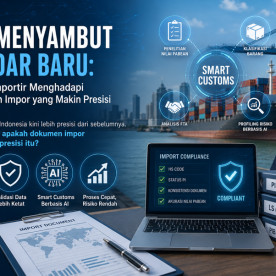
The year 2026 marks a significant step forward in national customs administration. The Directorate General of Customs and Excise (DJBC) is developing AI-based Smart Customs — technology that supports customs valuation research, goods classification, and analysis of free trade agreement (FTA) utilization in ways that are faster, more accurate, and more objective. Supported by optimized scanning equipment and AI-based risk profiling, this system is designed to make customs procedures more efficient for well-organized businesses while strengthening the transparency of national trade overall. 2026.08.12
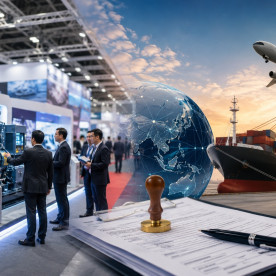
Every company that brings goods to an exhibition — especially high-value industrial goods like machinery, heavy equipment, or technical equipment — is actually making one important decision without realizing it: what customs status will be applied to these goods? 2026.07.30


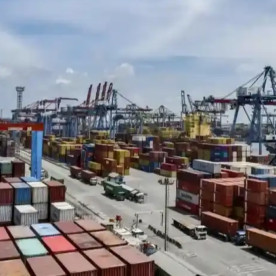
Licensing has been simplified. Certain requirements such as Registered Exporter (ET) status have been removed. The process now revolves primarily around Export Approval (PE) and Surveyor Report (LS), supported by increasingly digitalized systems. 2026.04.13

For industry leaders and CPO exporters, these challenges are tangible: the Rupiah, which weakened to around IDR 17,100 per USD, export logistics costs that risk rising by up to 50%, and growing uncertainty in raw material shipment schedules. Amid rising import costs, operational efficiency is no longer a buzzword—it is a necessity for survival.
Read this article
Ready for New Standards: An Importer's Guide to Increasingly Precise Import Controls
Indonesia's Customs System is now more precise than ever. The question is: are your import documents equally precise?The year 2026 marks a significant step forward in national customs administration. The Directorate General of Customs and Excise (DJBC) is developing AI-based Smart Customs — technology that supports customs valuation research, goods classification, and analysis of free trade agreement (FTA) utilization in ways that are faster, more accurate, and more objective. Supported by optimized scanning equipment and AI-based risk profiling, this system is designed to make customs procedures more efficient for well-organized businesses while strengthening the transparency of national trade overall. 2026.08.12
Read this article
Exhibition Goods: Coming Home or Staying Put? Know Your Options Before It's Too Late
Every company bringing goods to an exhibition needs to understand their customs status from the startEvery company that brings goods to an exhibition — especially high-value industrial goods like machinery, heavy equipment, or technical equipment — is actually making one important decision without realizing it: what customs status will be applied to these goods? 2026.07.30
Read this article
PI and SNI in Geothermal & Mining Projects: Not the Heavy Equipment, But Its Supporting Components
When discussing imports for geothermal or mining projects, attention typically focuses on heavy machinery — excavators, drill rigs, dump trucks. Yet heavy equipment itself generally does not appear on the list of goods requiring Import Approval (PI) or Indonesian National Standards (SNI). 2026.07.20
Read this article
10,000 Containers Detained at Priok: A More Useful Lesson Than We Thought
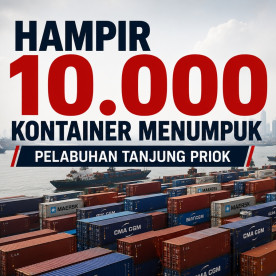
Over the past month, one figure has continuously appeared in Indonesian logistics and automotive news: almost 10,000 containers were temporarily piled up at Tanjung Priok Port. It has been widely discussed in various forums and became a matter of national concern. 2026.06.29
Read this article
North Sumatra's Oleochemical Industry Potential Is Real. Here Are 5 Things That Have Never Been Told to Investors Before They Build Here.
A decade ago, Sei Mangkei was nothing more than potential — a special economic zone with grand plans, port projects still on paper, and a handful of early investors willing to take the risk. Today, major global oleochemical names are already operating here, container volumes along this corridor grow every year, and North Sumatra is genuinely becoming one of the region's serious palm oil downstream processing hubs. This part of the story is real, and it deserves to be told as a success. 2026.06.22
Read this article
Your Container Is Stuck at Priok. Here Are the Costs You're Bearing Right Now.
Thousands of containers are currently being held up at Tanjung Priok Port, and every day of delay means money lost from the pockets of industrial importers. As of mid-June 2026, Customs authorities recorded that the number of accumulated containers had reached nearly 10,000 units — including automotive components from major companies such as BYD and Wuling that had already received their SPPB (Customs Release Approval) but had yet to be released from the port. This is not merely news — it is a real risk currently facing the national industrial supply chain. 2026.06.15
Read this article
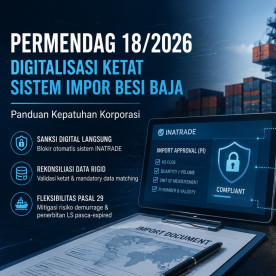
Permendag 18/2026: Stricter Digitalization of Steel Import Systems – A Corporate Compliance Guide
For CEOs and business leaders in Indonesia’s steel manufacturing industry, securing a reliable supply of raw materials such as billets, scrap metal, and machinery components from China is essential to maintaining plant uptime. The implementation of Minister of Trade Regulation (Permendag) No. 18 of 2026, an amendment to Permendag No. 16 of 2025, effective June 4, 2026, introduces systemic changes that must be carefully anticipated to ensure uninterrupted production operations. 2026.06.02
Read this article
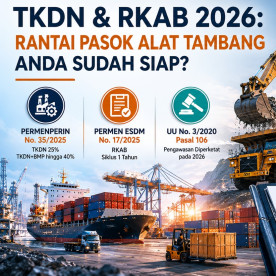
TKDN & RKAB 2026: Is Your Mining Equipment Supply Chain Ready?
For years, Chinese-manufactured heavy equipment has been a backbone of Indonesia’s mining industry. Competitive quality, efficient pricing, and reliable delivery made it a natural choice. 2026.05.25
Read this article
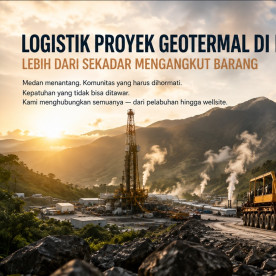
Geothermal Project Logistics in Indonesia: More Than Just Moving Cargo
Indonesia holds the world’s largest geothermal potential. Yet behind this ambitious vision lies a logistics challenge that is rarely discussed—and often underestimated. 2026.05.11
Read this article
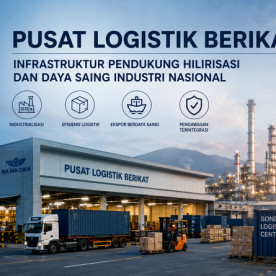
Bonded Logistics Centers: Infrastructure Supporting Downstream Industrialization and National Competitiveness
The Government of Indonesia, under the direction of President Prabowo Subianto and fiscal policy leadership from the Ministry of Finance, has established three pillars of national economic growth: investment, industrialization, and productivity. The downstreaming agenda continues to be reinforced as a core strategy to increase the value-added of Indonesian products in global markets while expanding state revenue from high-value exports. 2026.04.27
Read this article
Faster Exports in 2026, But Scrutiny Shifts to Audit—Are You Ready?
Minister of Trade Regulations No. 5 and 6 of 2026 send a clear signal: Indonesia’s exports are being accelerated.Licensing has been simplified. Certain requirements such as Registered Exporter (ET) status have been removed. The process now revolves primarily around Export Approval (PE) and Surveyor Report (LS), supported by increasingly digitalized systems. 2026.04.13
Read this article
Keeping the Wheels of Manufacturing Turning: Resilient Strategies Amid Global Turbulence
Indonesia’s industrial sector is currently being tested by increasingly uncertain global dynamics. The escalating conflict between the United States and Iran is no longer just international news—it has become a direct operational risk. Data indicates that Indonesia’s Manufacturing Purchasing Managers' Index (PMI) is approaching the stagnation threshold, as markets brace for potential escalation in the Strait of Hormuz.For industry leaders and CPO exporters, these challenges are tangible: the Rupiah, which weakened to around IDR 17,100 per USD, export logistics costs that risk rising by up to 50%, and growing uncertainty in raw material shipment schedules. Amid rising import costs, operational efficiency is no longer a buzzword—it is a necessity for survival.